Or, are things still stressful?
So you’ve got a dog (or you’re thinking of getting one). They’re cute, wiggly, maybe a bundle of energy—and maybe you’re wondering: does my dog need training or maybe more training if you’ve done some in the past? The short answer: yes. And not just any training, but thoughtful, professional guided training that sets the stage for a lifetime of ease, joy, and partnership. And don’t be fooled, training is more for the owner than the dog, so maybe you are both needing some support.
At Full House Dog Training, we believe that training isn’t just about “sit” and “stay.” It’s about cultivating emotional stability, reducing family stress, and creating a partnership that transforms your home life.
How to Tell if Your Dog Needs Training
Here are some indicators that your dog would benefit from (or is ready for) professional training:
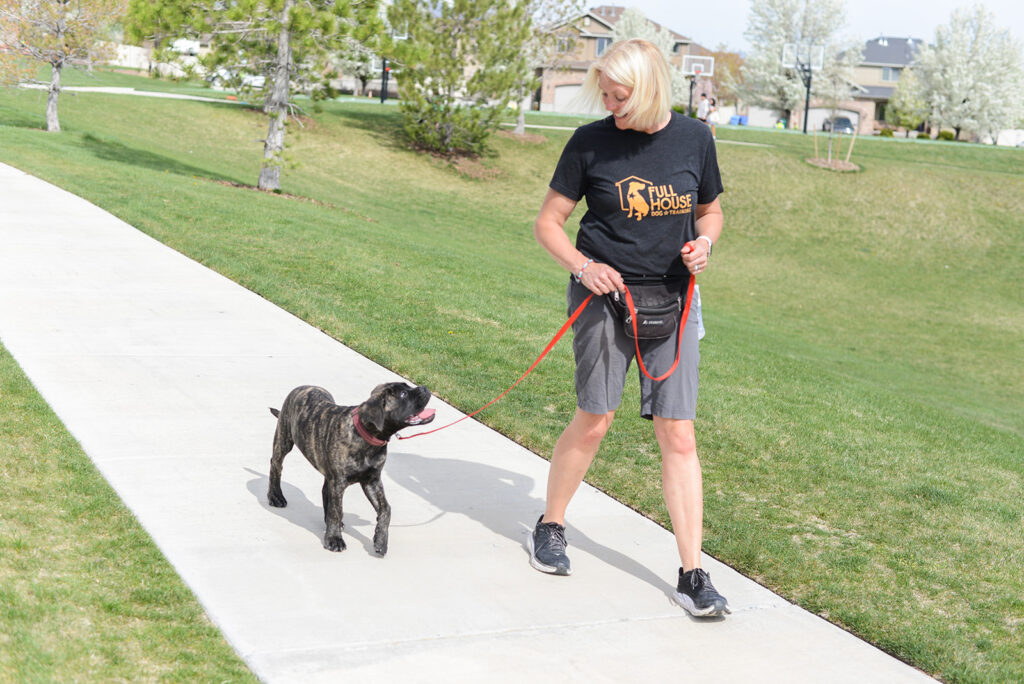
- Your dog pulls on leash, lunges at other dogs/people, or won’t walk politely.
- You struggle with recall (dog doesn’t reliably come when called).
- Your dog shows signs of separation anxiety (e.g., destructive when left, vocalizing, stress related behaviors).
- You have a puppy and want to build a strong foundation (for instance, puppy potty training, socialization, early habit formation).
- You want to include your dog in more of your life (visits, travel, outings) but the behavior is holding you back.
- You simply want a calmer, better behaved dog so you can enjoy your time rather than constantly managing misbehavior.
If you check one or more of these boxes, it’s time to act.
Three Practical Ways to Implement Training in Your Daily Life
Here are three actionable strategies you can apply starting today—whether your dog is already attending a class at Full House or you’re preparing to enroll.
1. Integrate mini training sessions into your daily routine
You don’t need huge blocks of time—consistent short sessions win out.
- Find 10 minutes a day to work with your dog in an environment where they can have a high level of success. This usually starts indoors where you can control the distractions.
These mini sessions support our “Beyond Obedience, Striving for Self Reliance” message—your dog gets used to making good choices, not just obeying when you’re watching.
2. Practice recall and off leash readiness in safe spaces
One of the biggest rewards of training is the freedom it opens up.
- Starting indoors and at a short distance, call your dog by name in a cheerful voice. When they come, reward them generously—treats, praise, play. Repeat.
- Gradually increase distractions (another person, another dog, a toy) and go through the same steps. Make coming to you the best thing in the environment.
- Once reliable indoors, start moving to new locations. Stay focused on success! Adjust the environment to make sure each repetition is correct.
Small steps to help you feel confident letting your dog participate in life, rather than holding them back or worrying about them.
3. Address separation anxiety and independence building
One of the most common stressors in families with dogs is separation anxiety.
- Switch up your departure ritual by placing piles of food or treats in common areas of your home—no big fuss, no prolonged goodbyes.
- Give the dog something to “do” when you leave—a treat toy, a puzzle feeder, a safe chew—to engage them independently.
- If issues persist, consult professional help (which we offer). Separation anxiety reduces when the dog knows you’re coming back, when their environment is predictable and safe, when they have self reliance.
This skill is best handled with professional support to really get to the core of the emotional aspect of helping your dog be away from you.
Why Training Matters
1. Only a small fraction of dogs participate in formal training
After researching this thought, we discovered that while many dogs receive some level of informal guidance at home, only a small percentage attend professional training or structured obedience training. One dog training site notes that just 8% of people take their dog to training classes. Pet Palace Resort+1 Another source mentions only around 4% of dogs in the U.S. taking a training class. Mi Dog Guide Whatever the number is, this means the vast majority of dogs are missing out on a formally guided path.
What does that tell us? It means most dogs AND their owners are navigating life without the benefit of structured, expert guidance—and the owners are juggling a lot of the challenge themselves.
2. Training = an investment in quality of life, together
When you enroll your dog in professional training (such as a group class, private sessions or Day Training), you’re investing in so much more than “learn some commands.” You’re investing in:
- Emotional resilience: A dog that knows how to manage excitement, fear, separation, change.
- Family harmony: Fewer leash pulls, fewer embarrassing moments when guests arrive, fewer stress points for you.
- Partnership: You and your dog are on the same team. With the right training, you’ll both feel it.
- Longterm value: A well behaved dog is easier to live with, easier to include in family activities, easier to trust.
In other words, professional training unlocks living our best life with our dogs.
3. Beyond obedience: the bigger picture
At Full House, we focus on two key principles in creating a well-mannered member of your family:
- Beyond Obedience, Striving for SelfReliance: Our goal isn’t merely to teach your dog commands like “sit” or “down.” It’s to help them develop emotional stability and the ability to make good choices even when you’re not actively directing them.
- Reducing Family Stress, Increasing Joy: We know family life has a million moving parts. A dog that’s pulling, barking, or anxious when you leave—they create stress. Training transforms those behaviors into calm confidence, so you get pride and joyful companionship instead of worry and frustration.
When training is handled professionally, you’re not continually searching for the next best online video or browsing chat boards to have your questions answered. You will learn more specifically to the needs of your individual dog and enable your pup to fit naturally into your home, into your outings, and into your life.
4. The hidden cost of skipping training
If you decide your dog doesn’t “need” training, or you’ll “just do it later,” there are hidden costs:
- Behavioral issues may develop (or get worse) and become harder to reverse.
- Your dog may miss out on socialization, coping skills, or early training windows.
- You (the owner) may experience more stress, anxiety, restrictions on what you can do with your dog.
- Family dynamics can be strained—pets are part of the family, and when they’re difficult, that affects everyone.
In short: training is not a “nice to have.” It’s a smart investment.
Why Choose Full House Dog Training
Full House delivers on the investment and your dog’s transformation.
- Partnership in Transformation: We don’t just train your dog and send you off. We work with you, the owner—empowering you with understanding, communication skills, and support. You become part of the team, equipped and confident.
- Lifetime Support: this element of our training program gives every owner peace of mind that you will continue to have your questions answered and a partner to coach you along the way. A week, a month or years down the road, Full House will be ready to guide you through the next steps of your training journey.
- Trusted Expertise, Proven Method: Our EmotionalBased Training approach is built on experience and science. We’ve seen the difference when dogs aren’t just told what to do, but are guided toward positive behavior and proper choices that align with your lifestyle.
- A Community Hub for Dogs and People: When you join Full House, you join more than a class. You join a community. Group classes, social events, shared experiences—all centered around the love of dogs. That means ongoing connection, fun, and support.
Imagine your dog walking calmly beside you, greeting guests politely, coming when you call them—even when there’s a squirrel, a loud noise, or another dog in the yard. Imagine your family no longer stressed about the dog’s behavior but happy to include them in outings, vacations, quiet evenings. That’s what training can unlock.
Is Professional Training Worth It?
Yes—any professional training program is an investment of time and money. But consider this – what is the cost of not investing?
- Time lost managing misbehavior
- Fewer opportunities to include your dog in life events
- Stress and frustration
- Possible damage (destruction, injury, dominance issues)
- Potential losses in quality of life for you and your dog
In comparison, a structured training program gives you the tools, the guidance, the community, and the framework to succeed. In fact, dog training industry research shows the market is growing steadily—meaning more owners are making the investment. Pet Educate
So yes—you’ll pay for training. But you’ll gain a happier, more integrated, more reliable dog and a calmer, more joyful family life. At Full House Dog Training, that’s exactly our goal.
Frequently Asked Questions
Q: My dog already sits and comes sometimes—do we still need training?
Yes. Commands are a base. Professional training builds behavioral reliability, emotional resilience, appropriate responses under stress, social skills, and freedom. Even a “good” dog benefits from structured training.
Q: My puppy is young—should we wait?
Actually, early training is especially effective. With a young dog you can build good habits, socialization, potty training, crate training, impulse control and prevent trouble later. Starting around twelve weeks of age is a good timeline to consider. (Indeed, studies show early training reduces later aggression, destructive behaviors and anxiety. centerforcaninebehaviorstudies.org
So for puppy training, acting now pays off.
Q: I’m on a budget. Can’t I just train my dog myself?
You can, and home training has value. But professional training adds these advantages: structured curriculum, expert guidance to catch mistakes, a group class environment that offers socialization and distraction practice, and a framework that helps you succeed quicker. With Full House, you also get our Lifetime Support, which means you’re not doing it alone.
Q: My dog seems fine—why fix what’s not broken?
Because training isn’t just about fixing broken behavior—it’s about supporting thriving behavior. Even dogs that are “fine” can be more confident, more resilient, more responsive, safer in new situations, and better integrated into your family life. Why settle for fine when you can aim for great?
Does your dog need training? If you’re aiming for a dog who doesn’t just survive in your home—but thrive, then yes — training is a key part of the journey.
At Full House Dog Training, we reject the notion that training is optional. We believe you and your dog deserve a path to emotional stability, reliable behavior, joyful companionship, and lifelong partnership. Our Emotional Based Training, paired with professional expertise, empowers your dog to be self reliant, your family to live with less stress, and your life together to be richer.
So whether you have a rambunctious puppy, a rescue dog with questions, or a mature dog that could be better integrated into family life—the time to invest in training is now. Because more than just commands, you’re investing in quality of life—for you, your dog, and everyone in your home.
Ready to take the next step? Let us partner with you. Let’s build the kind of dog human relationship you’ve always wanted: confident, calm, connected, and full of joy.